3D Printed Veneers: The New Cosmetic Option Changing Mckinney City Smiles
If you’ve been browsing Instagram or TikTok lately, you’ve undoubtedly seen patients leaving a dentist clinic with a brand-new smile created the same afternoon using 3D printed veneers. For two weeks, avoid grinding your teeth. No temporary plastic is attached to your front teeth while porcelain is being produced in a laboratory. All that’s needed is a scan, a digital design, and a printed set of 3D printed veneers that are bonded on the same day for a fast and precise smile makeover.
It seems almost too good to be true. Patients in Mckinney City frequently ask us if 3D printed veneers are genuine and if they are a decent choice.
In a nutshell, the answer is yes. They’re genuine, effective, and among the most exciting cosmetic choices we’ve had in years for the right patient. They can’t, however, magically replace porcelain. Anyone who tells you otherwise is either trying to sell you something or is confused. Porcelain and printed veneers are both available at Mckinney City’s ProCare Dental Studio. This article provides an honest explanation of what 3D printed veneers are, who can benefit from them, who shouldn’t, and how much they cost.
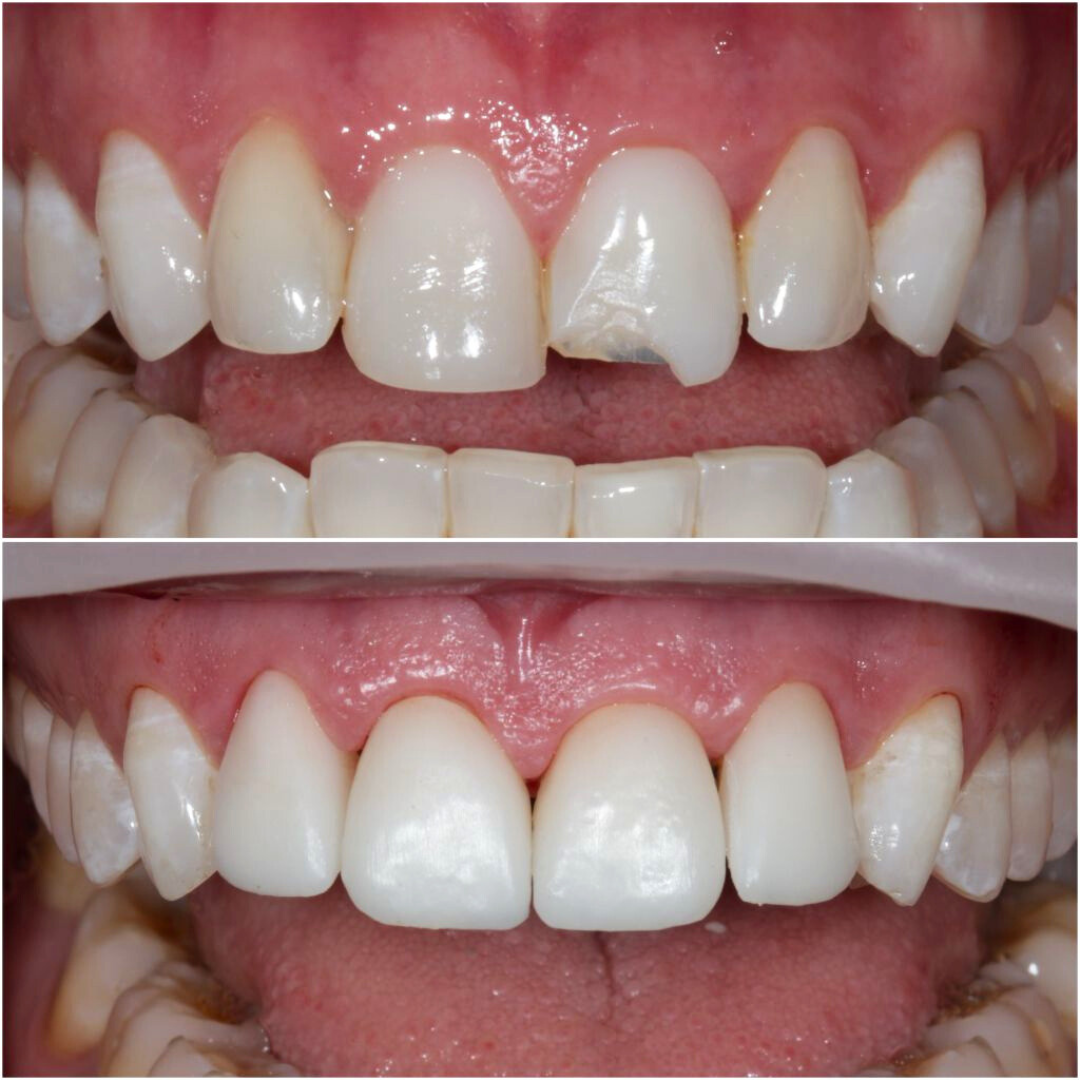
What Are 3D Printed Veneers? (Also Called Hybrid Veneers)
The thin, tooth-shaped shell of a 3D printed veneer is also known as a hybrid veneer. We use a chairside 3D printer to manufacture it layer by layer after digitally designing it on a computer. Like a conventional veneer, we glue it to the front of your tooth after it has been polished and described.
Why They’re Called “Hybrid”
The term “hybrid” refers to their composition. These are not traditional composite bonding methods. We employ a high-strength dental resin infused with about 60-70% porcelain (ceramic) particles to create them. A hybrid veneer gets its strength, gloss, and stain resistance from the porcelain filler. Because they are mostly made of resin, plain composite bonding veneers lack that.
When you compare your options, it helps to think of veneers on a spectrum:
- Composite bonding veneers are made of hand-sculpted resin, primarily plastic. They are quick and cheap, but they discolor, wear, and chip the most.
- 60-70% porcelain-infused resin is utilized to create 3D printed or hybrid veneers. With a high-definition finish, it is far more durable and stain-resistant than bonding. delivered within two to three days.
- The gold standard is porcelain veneers. Ultra-lifelike, made entirely of porcelain, they usually survive ten to fifteen years. the most costly choice.
Where 3D Printed Hybrid Veneers Shine
- Faster turnaround. Unlike traditional porcelain cases, which require two to three weeks of temporary labor while an outside lab works, most cases are completed in two to three days.
- More affordable. Printed hybrid veneers at ProCare Dental Studio make full smile makeovers attainable for patients who might otherwise postpone treatment for years.
- Less invasive. In many cases, there is little to no drilling required on your native tooth because we glue printed veneers more like a cosmetic overlay. This operation is almost reversible for the correct patient.
- Stronger and more stain-resistant than composite bonding. Because of the 60-70% porcelain infusion, hybrid veneers function far better in terms of wear and stains than plain bonded composite, which is what consumers frequently mistake printed veneers for.
- Easy to tweak or reprint. We can modify and reproduce chairside if we need to improve a shape, a shade, or a length. No need to wait in a lab.
- Perfect for a “trial-smile”. Before committing to the long-term porcelain version, you can try out different smile shapes, lengths, and shades for a few years.
Quick Comparison: Porcelain vs. 3D Printed Hybrid Veneers
Esthetics: Porcelain – exceptionally natural appearance. 3D Printed – crisp, high-definition aesthetics.
Composition: Porcelain – crafted entirely from porcelain. 3D Printed – made with porcelain-infused resin.
Longevity: Porcelain – designed for long-term durability. 3D Printed – offers reliable short- to mid-term performance.
Speed: Porcelain – typically completed over several weeks. 3D Printed – completed within just a few days.
Repairability: Porcelain – repairs can be challenging. 3D Printed – simple and convenient to repair.
Adjustments: Porcelain – modifications are more complex. 3D Printed – adjustments are quick and straightforward.
Stain resistance: Porcelain – highly resistant to staining. 3D Printed – maintains good stain resistance.
The 3D Printed Veneer Process at ProCare Dental Studio
Step 1: Consultation and Smile Design
We begin by discussing your smile goals and any concerns you may have about your current teeth. Digital photos and a fast 3D scan are then taken to create a virtual model of your smile.
Step 2: Digital Design
Using advanced in-house software, we carefully design each veneer to match your ideal look, including the shape, size, shade, and overall balance with your facial features and smile.
Step 3: Printing
Your hybrid veneers are produced in our in-house lab using a dental-grade 3D printer and porcelain-infused hybrid material. By handling everything on-site, we maintain complete quality control and can quickly refine any details if needed.
Step 4: Bonding
During your placement appointment, the front surfaces of your teeth are prepared as conservatively as possible before each veneer is bonded individually into position. We then polish the veneers, fine-tune your bite, and ensure your new smile feels comfortable and natural.
Who Is a Good Candidate for 3D Printed Veneers in Mckinney City?
1. The Patient Who Wants to “Try On” a New Smile
If you’ve been considering veneers but aren’t ready to commit long-term to a specific shape or shade, printed hybrid veneers offer a flexible starting point. They allow you to experience your new smile in everyday life, from photos to conversations, before eventually transitioning to porcelain veneers if desired.
2. The Cost-Conscious Patient
For many patients, traditional porcelain veneers can feel financially out of reach. Printed hybrid veneers provide a more accessible alternative while still delivering a natural-looking, high-definition smile transformation without years of waiting.
3. The Younger Patient Whose Smile Is Still Settling
Patients in their 20s may still experience subtle tooth movement or gum changes over time. Hybrid veneers can enhance the smile now while offering the flexibility to upgrade to porcelain later once everything has fully stabilized.
4. The Patient Who Wants a Minimally Invasive Option
If your teeth are already in good overall shape and you mainly want to improve color, close small gaps, repair chips, or adjust length, printed veneers often require very minimal alteration to your natural teeth.